
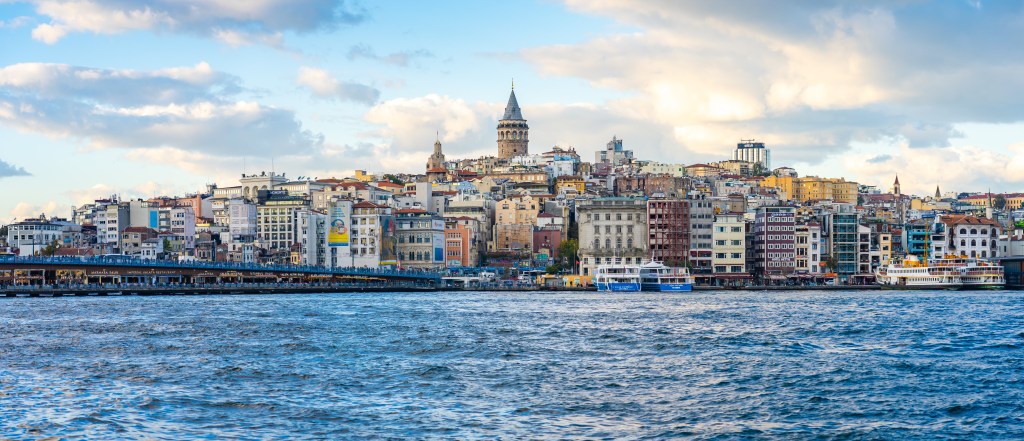
Ancient district in northwestern Anatolia, adjoining the Sea of Marmara’ vicinity, the Bosporus, and the Black Sea, thus occupying an important and precarious position between East and West.
İstanbul
Today one of the most important city is Istanbul in Anatolia mainly in border of Bithynia. This largest city having today around 20 million population which is 16% of Turkey’s population. And the 3rd largest metropolitan area in Europe. It is located on the Bosphorus Strait and encricles the natural harbour known as the Golden Horn, locating on the northwest of the country. It extends both on the European and on the Asian sides of the Bosphorus thereby it is the only metropolis in the world that is situated on two continents.
The history begins around 660 BC when the settlers from Megara under the command of King Byzas established on the European side of the Bosphorus. The city experienced a brief period of Persian rule around 5th century BC. Byzantium officially became a part of the Roman Empire in AD 73. Finally in 330 AD it was officially declared the capital of the Roman Empire. Although the city was initially called the Second Rome or New Rome, these names were soon forgotten to be replaced by “Byzantium” and in later ages by “Constantinopolis”. The Latin invasion was a dark page in the history of Istanbul. It started with the invasion of the city by the armies of the Fourth Crusade in 1204. increasing threats of the expanding Ottoman Empire finally came to an climax when, following a siege of fifty-three days in 1453, the city was captured by the Turks.
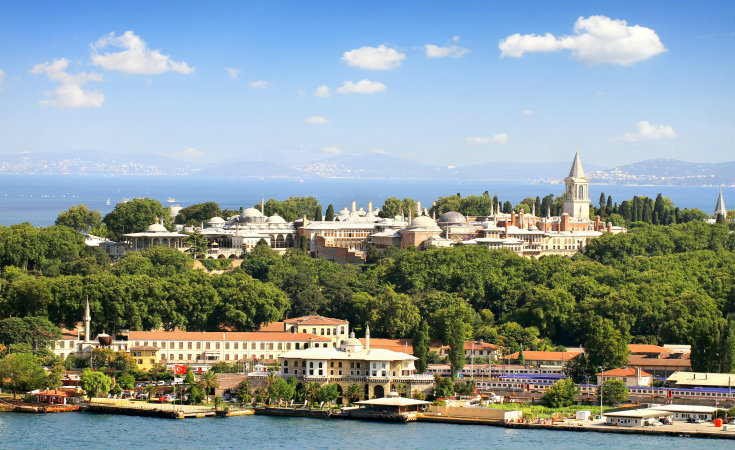
The Imperial Topkapi Palace built on the site of the old acropolis commands an extraordinarily beautiful view of the Bosphorus and the Golden Horn. As a result of closer contacts with the West, mosques and palaces in European style were built along the shores of the Bosphorus by the 19th century. Till Republic Era it was capital city of Ottoman Empire.
After having some information about İstanbul, let’s start our trip with Istanbul. What to see in İstanbul? – Hippodrome, Topkapı Palace, Blue Mosque, 1001 Direk cistern, Grand Bazaar, Galata Tower, İstiklal Street, Ortaköy Mosque, Maiden Tower, Chora Museum.
Hippodrome
The Hippodrome of Constantinople was a circus that was the sporting and social centre of Constantinople, capital of the Byzantine Empire. Today it is a square named Sultan Ahmet Square in the Turkish city of Istanbul, with only a few components of the original structure surviving. Let’s visit them.
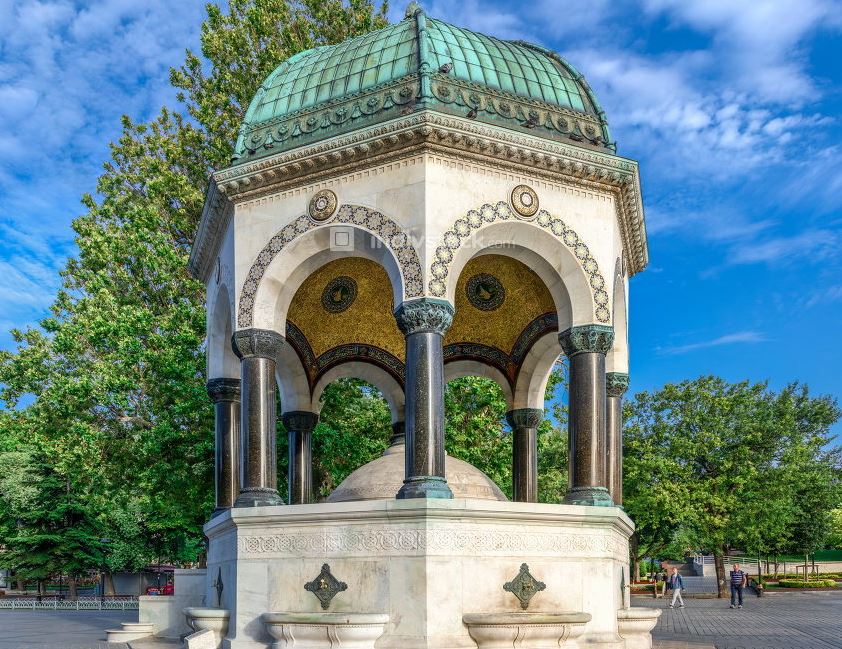
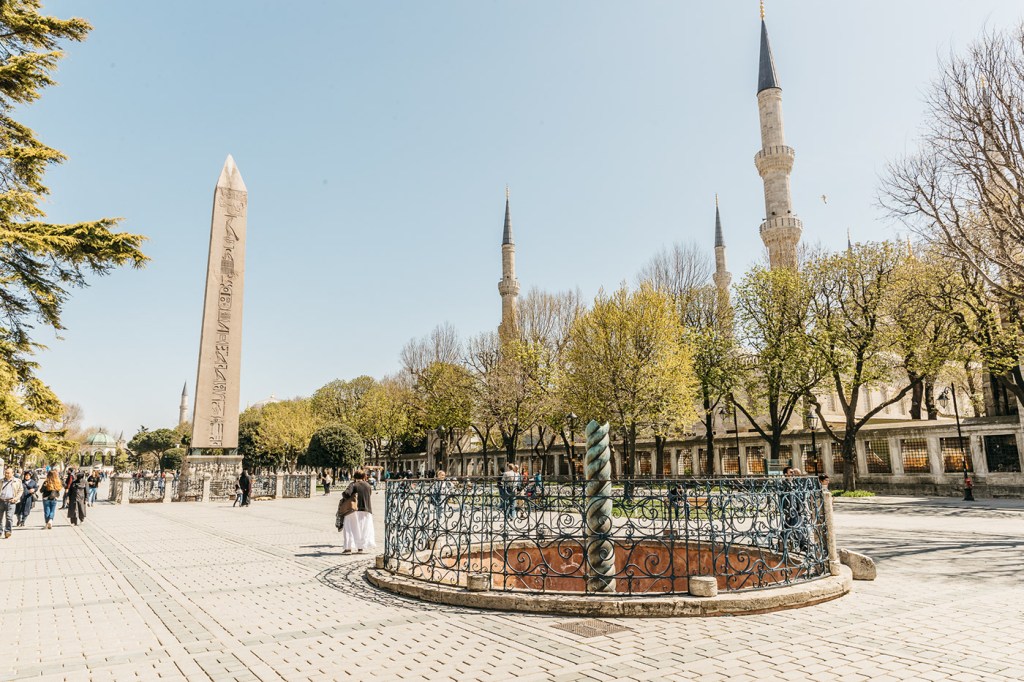
When we arrive at Hippodrome, we see respectively German Fountain, Obelisk, Walled Obelisk and Serpent Column stand out.
The German Fountain is located in Sultanahmet Square in Istanbul across from the Mausoleum of Sultan Ahmed I. It was constructed to commemorate the second anniversary of the German Emperor Wilhelm II’s visit to Istanbul in 1898. It was officially opened January 27, 1901, on the birthday of German Emperor Wilhelm II. built in Germany, then transported piece by piece. The Neo-Renaissance style of fountain’s octagonal dome features eight marble columns, and the interior is covered with golden mosaics.
The Obelisk was first set up by Tutmoses III (1479–1425 BC) to the south of the seventh pylon of the great temple of Karnak. The Roman emperor Constantius II (337-361 AD) had it and another obelisk transported along the river Nile to Alexandria to commemorate his ventennalia or 20 years on the throne in 357. The other obelisk was erected on the spina of the Circus Maximus in Rome in the autumn of that year, and is today known as the Lateran obelisk, whilst the obelisk that would become the obelisk of Theodosius remained in Alexandria until 390, when Theodosius I (378-392 AD) had it transported to Constantinople and put up on the spina of the Hippodrome there.
Walled Obelisk; in the 10th century the Emperor Constantine Porphyrogenitus built another obelisk at the other end of the Hippodrome. The 32 meter-high obelisk was originally covered with gilded bronze plaques, but they were sacked by Latin troops in the Fourth Crusade. The stone core of this monument also survives, known as the Walled Obelisk.
The Serpent Column is one of the oldest monuments in Istanbul. The heads of the three intertwined serpents used to form the legs of a gold cauldron. The thirty-one Greek cities, which defeated the Persians in 5th century, BC melted the bronze items they had captured to create this unique monument. The 8-meter high column originally stood before the Temple of Apollo in Delphi. It was brought to Istanbul in 324 by Constantine and erected in the middle of the Hippodrome. The heads of the serpents, intact until 1700, disappeared at that time. One of the missing heads was later found and it is now on display at the Archeological Museum.
Topkapı Palace
The Topkapı Palace is the biggest palace in Turkey, that was the primary residence of the Ottoman Sultans for approximately 400 years of their 624-year reign. As well as a royal residence, the palace was a setting for state issues and royal entertainments. It is now a main tourist attraction and contains important holy relics of the Muslim world including the Prophet Muhammed’s cloak and sword. The Topkapı Palace is among the monuments contained within the “Historic Areas of Istanbul”, which became a UNESCO World Heritage Site in 1985.
Construction started in 1459, order of Sultan Mehmed II, the conqueror of Byzantine Constantinople. The palace complex consists of four main courtyards and many smaller buildings. At its peak, the palace was home to as many as 4,000 people and covered a large area with a long shoreline.
The palace complex has hundreds of rooms and chambers but only the most important are accessible to the public today. The palace includes many fine examples of Ottoman architecture. It contains large collections of porcelain, robes, weapons, shields, armor, Ottoman miniatures, Islamic calligraphic manuscripts and murals, as well as a display of Ottoman treasures and jewelry.
Hagia Sophia
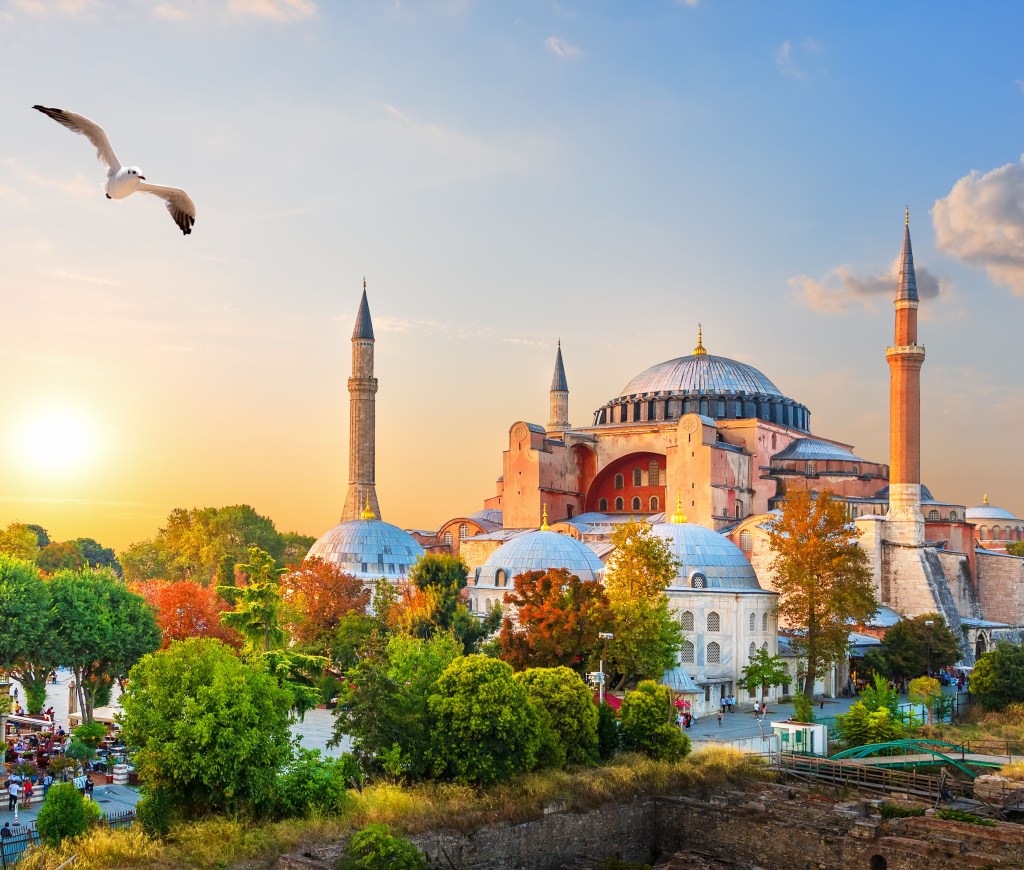
Hagia Sophia is known as the “Great Church” or “Magna Ecclesia” in Latin, the first church was built at the same location where there had been a pagan temple before. It was Constantius II who inaugurated Hagia Sophia on 15 February 360. From the chronicles of Socrates of Constantinople, we know that the church was built by the orders of Constantine the Great. This first church was a wooden-roofed basilica with a nave flanked by two or four aisles, each carrying a gallery storey. It was foregone by an atrium. This church was largely burned down in 404. After the first church’s being destroyed, Theodosius II ordered it to be repaired and inaugurated the second church on 10 October 405.
Only a short time after the destruction of the second church, Justinian the Great suppressed the rebellions and set about rebuilding what was damaged and destroyed. More than ten thousand people worked for the construction and the third church was inaugurated by the emperor on 27 December 537. The mosaics were finished later on during the reign of Justin II (565-578). The prophet of God in Muslim religion, Muhammad, had prophesied that the first Muslim to pray in Hagia Sophia would go to paradise. Since then, it was a great ambition for Muslim leaders to get Hagia Sophia.
Blue Mosque
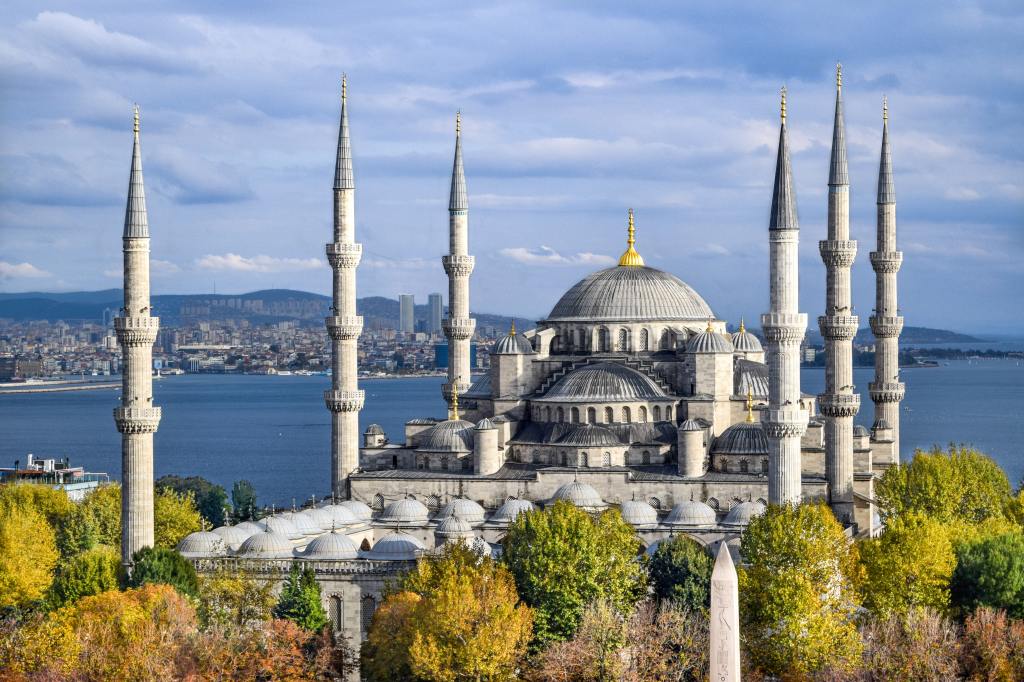
Near the Hippodrome, one of the best architectural building is rising called Sultan Ahmet Mosque, “Blue Mosque”. It was built from 1609 to 1616, during the rule of Ahmed I. Like many other mosques, it also comprises a tomb of the founder, a madrasah and a hospice. The design of the Sultan Ahmed Mosque is the culmination of two centuries of both Ottoman mosque and Byzantine church development. It includes some Byzantine elements of the neighboring Hagia Sophia with traditional Islamic architecture and is considered to be the last great mosque of the classical period. The architect has synthesized the experiences of its master Mimar Sinan, aiming for overwhelming size, majesty and grandeur. It has 6 minarates along with 8 domes and 1 main one.
Exterior; The court is about as large as the mosque itself and is surrounded by a continuous vaulted arcade. It has ablution facilities on both sides. The central hexagonal fountain is rather small in contrast with the sizes of the courtyard. The monumental but narrow gateway to the courtyard stands out architecturally from the arcade. Its semi-dome has a fine stalactite structure, crowned by a small ribbed dome on a tall tholobate.
Interior; At its lower levels and at every pier, the interior of the mosque is lined with more than 20,000 handmade ceramic tiles, made at Iznik in more than fifty different tulip designs. The tiles at lower levels are traditional in design, while at gallery level their design becomes flamboyant with representations of flowers, fruit and cypresses.The upper levels of the interior are dominated by blue paint. More than 200 stained glass windows with intricate designs admit natural light, today assisted by chandeliers
The Binbirdirek Cistern
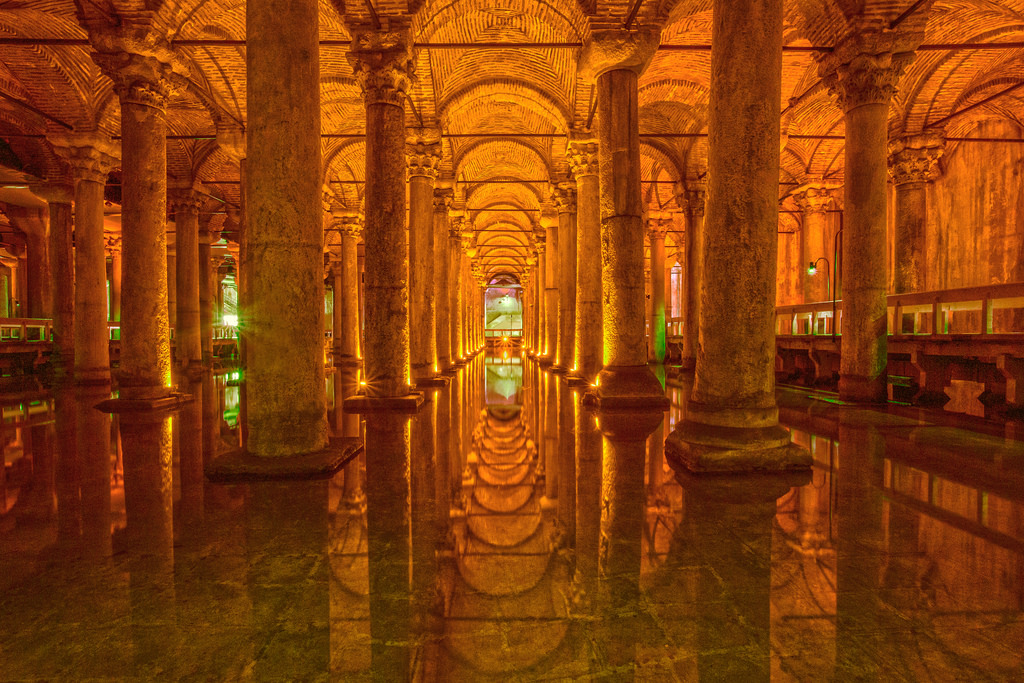
Binbirdirek Cistern, is a man-made underneath reservoir in Istanbul, situated between the Forum of Constantine and the Hippodrome of Constantinople in the Sultanahmet region. It has been restored and is now visited as a touristic place. Binbirdirek Cistern is the second largest cistern in Istanbul after the Basilica Cistern. The reservoir has a surface area of 3640 m2, storing 40,000 m3 of water of the city. The cistern is composed of a large hypostyle chamber supported by vaults.The 224 columns, each 14 to 15 meters tall, are made of marble from nearby Marmara Island. Each column is a superposition of two columns, joined by a marble ring. The floor of the cistern was later strenghtened, so that only the upper column and a short sleeve of the lower column are thus visible. The original height can be seen in an excavated pond with four columns in the middle of the cistern. Most of the columns, and also the caps, are engraved with a Greek mason’s mark. The cistern was restored by Justinian I in the 6th century, after the palace was completely destroyed in a fire in 475. After the conquest of the city by the Ottomans in 1453, the cistern fell into disuse, and was forgotten until rediscovered during the construction of Fazli Pasha’s palace on the same site in the 17th century.
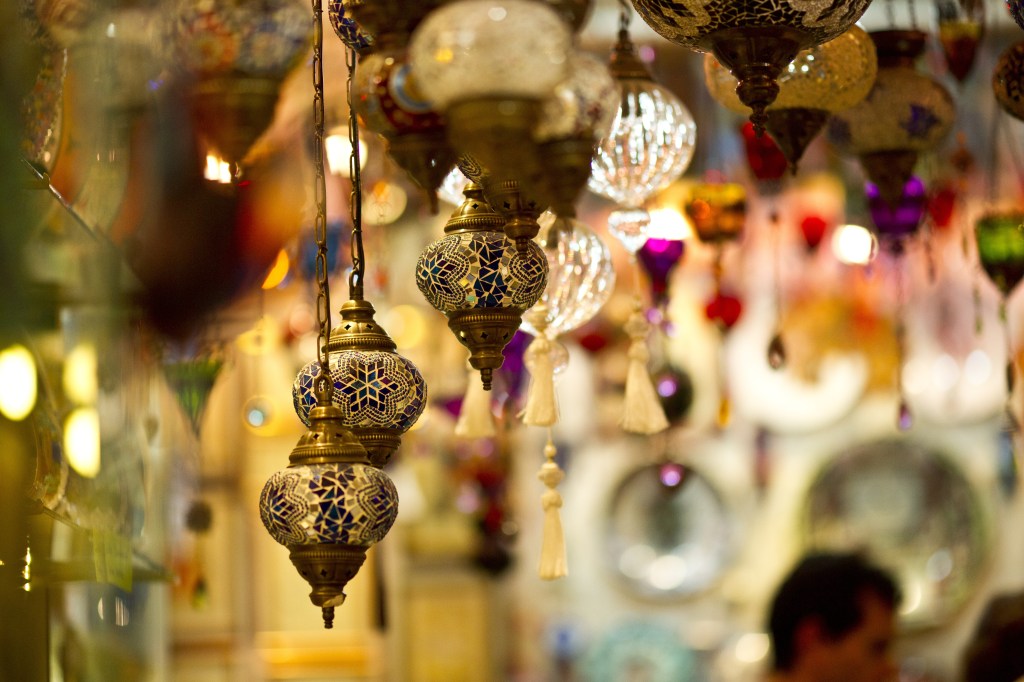
The Grand Bazaar
The Grand Bazaar in Istanbul is located on an area of 30,700 m2 with 61 covered roads and more than 4,000 shops. in Istanbul
History of Istanbul Grand Bazaar dates back to Ottomna Era. During the power of Suleiman the Magnificent, the Grand Bazaar became one of the most important centers of the Ottoman Empire with new shops, mosques, madrasas, inns and fountains.
After the 1766 earthquake in the Grand Bazaar, II. During the Mustafa period, the bazaar was repaired and the Beyazıt and Nuruosmaniye gates, which bear the characteristics of the Tulip Era, were added. It became unusable again in 1894 after a major earthquake. After all the devastating disasters, the bazaar, which was rebuilt with the financial support of Abdulhamid, took its current form. Due to Abdulhamid’s great efforts, you can see Abdulhamid’s signature on the gate of the Grand Bazaar at the main entrance of Beyazıt Square. And today it is a cultural value visited by many people from Turkey and abroad.
Galata Tower
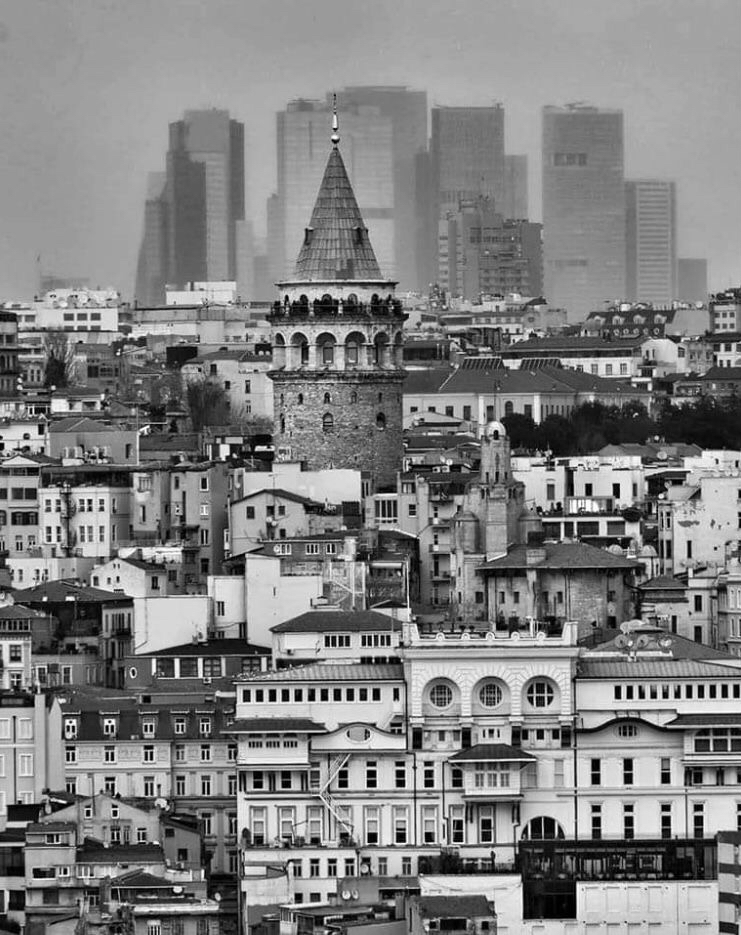
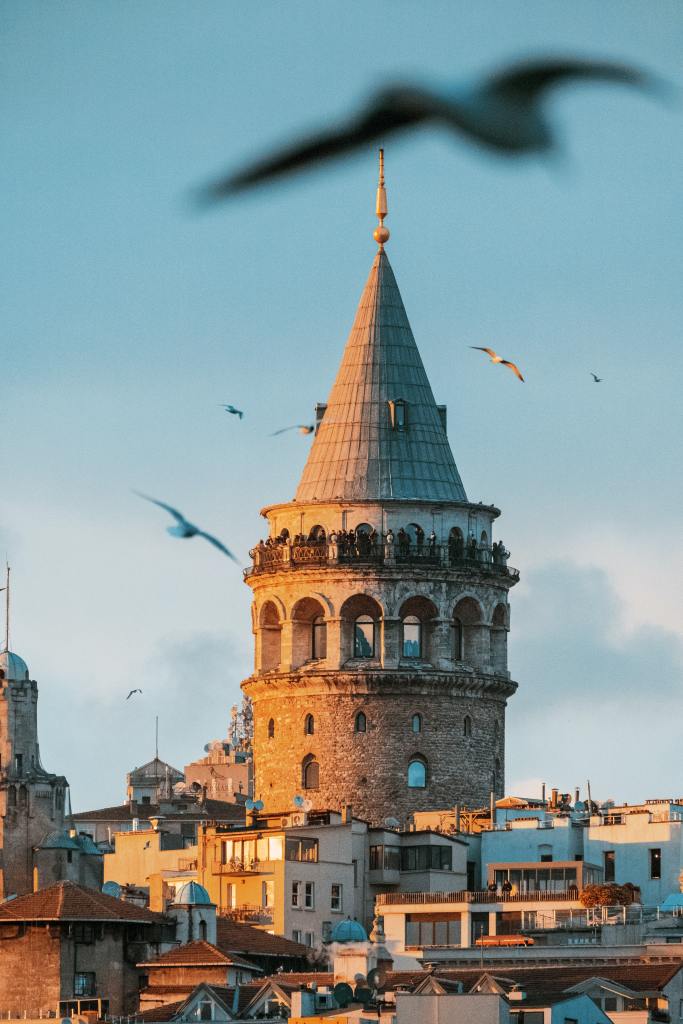
The Galata Tower by the Genoese, is a medieval stone tower in the Galata /Karaköy quarter of Istanbul, Turkey, just to the north of the Golden Horn. One of the city’s most striking landmarks, it is a high, cone-capped cylinder that dominates the skyline and offers a panoramic vista of Old Istanbul and its environsThe tower was built as Christea Turris in 1348 during an expansion of the Genoese colony in Constantinople. The nine-story tower is 66.90 meters tall (62.59 m without the ornament on top, 51.65 m at the observation deck), and was the city’s tallest structure when it was built. The elevation at ground level is 35 meters above sea-level. The tower has an external diameter of 16.45 meters at the base, an 8.95 meters diameter inside, and walls that are 3.75 meters thick.
There is a restaurant and café on its upper floors which command a magnificent view of Istanbul and the Bosphorus.
Ortaköy Mosque
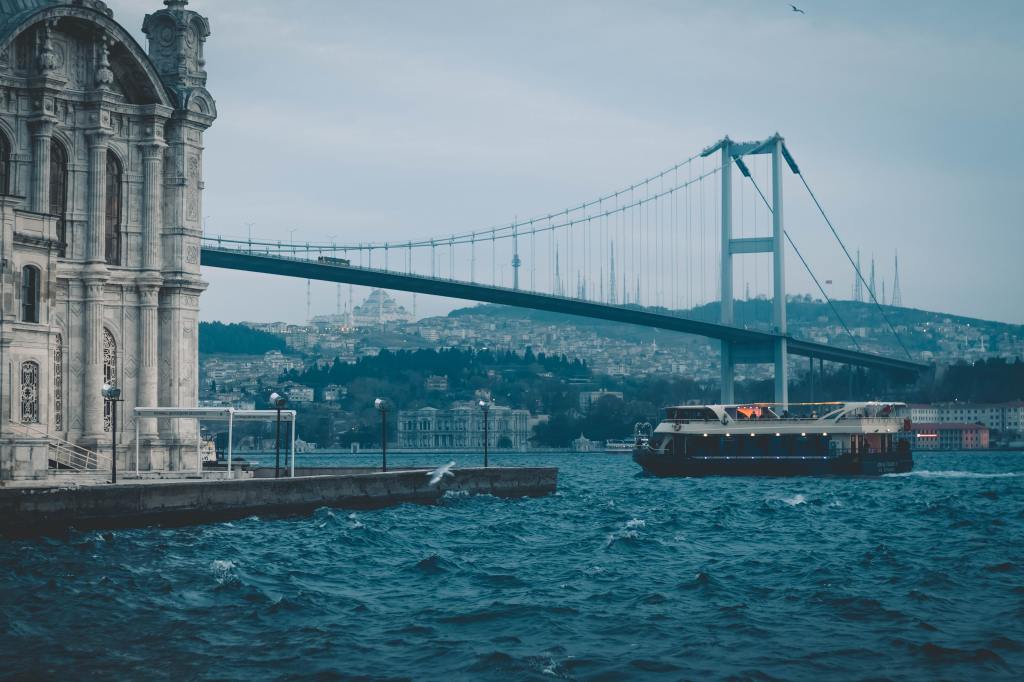
While watching beatufil view of Istanbul another building is meeting with us, Ortakoy Mosque. The Ortakoy Mosque is situated on the waterside of the Ortaköy pier square in the Beşiktaş District, one of the most popular locations on the Bosphorus. The mosque was built on the order of Abdulmecid (1839-1861), the ruler of the Ottoman Empire, and was constructed by the Nigoğos Balyan in 1853. It was during the same century that the mosque rose to a higher level of importance on the European side of Istanbul. It is also known as “Great Mecidiye Mosque” and is one of the most beautiful samples of the Baroque architecture in Istanbul.
Previously, there was a little mosque built by Mahmut Ağa, the son-in law of the Vizier Ibrahim Paşa, on the former site of the mosque. The little mosque built in 1721 but was destroyed during the revolt of Patrona Halil in 1730. The current mosque, which was erected in its place, was greatly damaged during the earthquake of 1894, and the spire of the minaret needed to be rearranged. When it was understood that the building was in danger of collapsing in 1960, ground reinforcement efforts were carried out. After the conflagration in 1984, it was completely restored and reattained its previous magnificence.
Maiden Tower
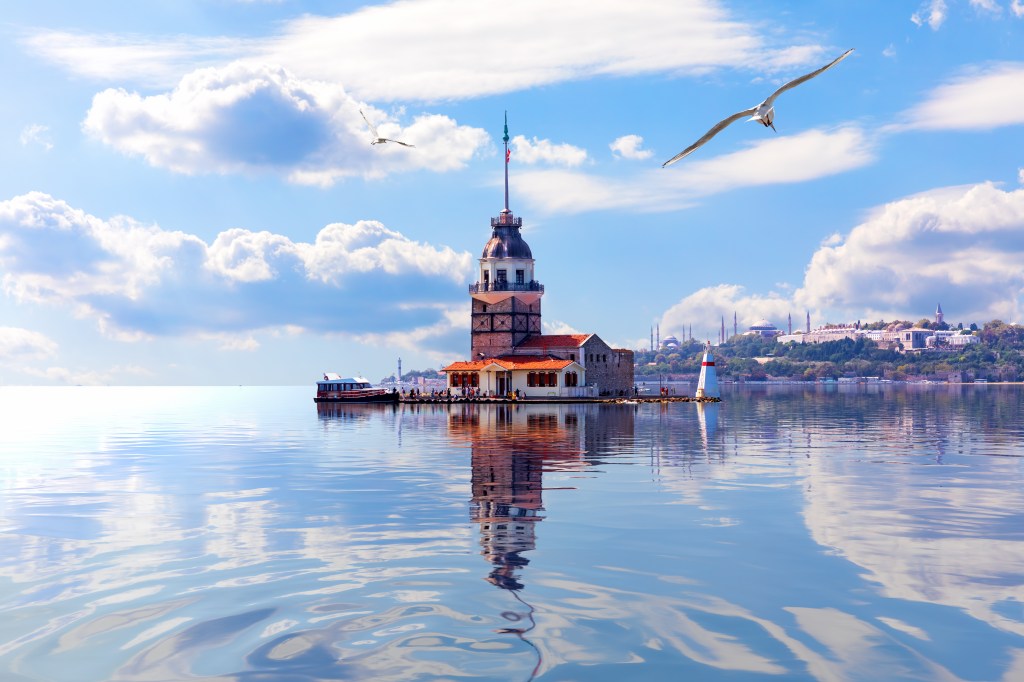
The Maiden’s Tower, also known as Leander’s Tower (Tower of Leandros) since the medieval Byzantine period, is a tower lying on a small islet located at the southern entrance of the Bosphorus strait 200 m. from the coast of Üsküdar in Istanbul, Turkey. After the naval victory at Cyzicus, the Ancient Athenian general Alcibiades possibly built a custom station for ships coming from the Black Sea on a small rock in front of Chrysopolis (today’s Üsküdar). On this site In 1110 Byzantine Emperor Alexius Comnenus built a wooden tower protected by a stone wall. From the tower an iron chain stretched across to another tower erected on the European shore, at the quarter of Mangana in Constantinople. After the conquest of the city, Sultan Mehmet II used the structure as a watch tower.
The tower, mistakenly known as Leander’s Tower after the legend of Hero and Leander (which took place in the Dardanelles), was destroyed during the earthquake of 1509, and burned in 1721. Since then it was used as a lighthouse, and the surrounding walls were repaired in 1731 and 1734, until in 1763 it was erected using stone. From 1829 the tower was used as a quarantine station, and in 1832 was restored by Sultan Mahmud II. Restored again by the harbour authority in 1945, the most recent restoration took place in 1998, when steel supports were added around the ancient tower as a precaution after the 17 August 1999 earthquake.
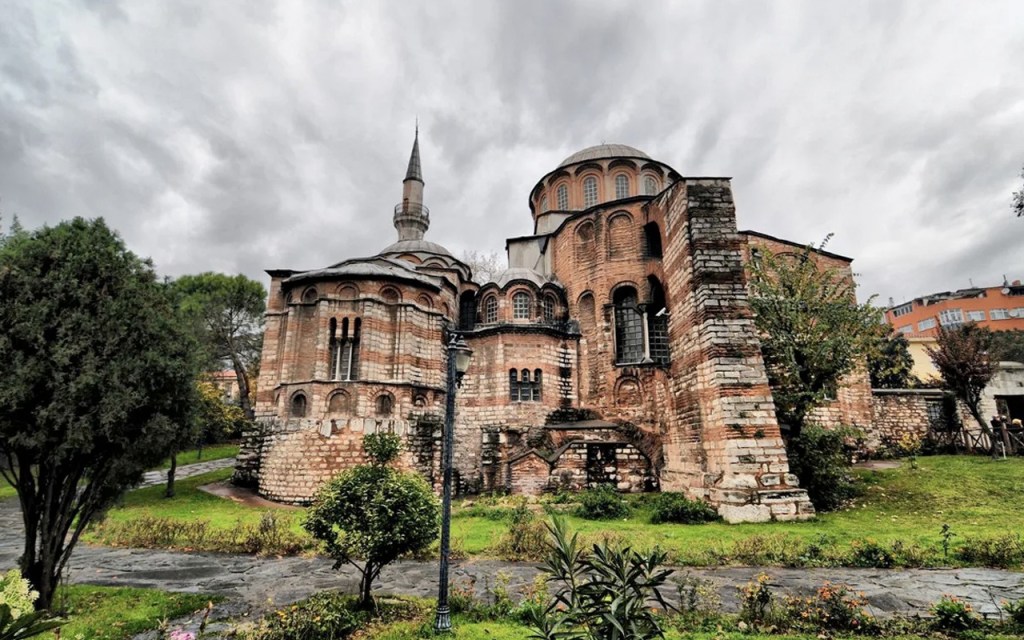
Chora Museum
The Church of the Holy Saviour in Chora is considered to be one of the most beautiful examples of a Byzantine church. The church is situated in Istanbul, in the Edirnekapı neighborhood, which lies in the western part of the municipality of Fatih. In the 16th century, the church was converted into a mosque by the Ottoman rulers and it became a secularised museum in 1948. The interior of the building is covered with fine mosaics and frescoes.
The last part of that name, Chora, referring to its location originally outside of the walls, became the shortened name of the church. The original church on this site was built in the early 5th century, and stood outside of the 4th century walls of Constantine the Great. However, when Theodosius II built his formidable land walls in 413–414, the church became incorporated within the city’s defences, but retained the name Chora.
Now we continue from İstanbul to south. Bursa, green city, known to the Byzantines as Prousa, served as the first capital of the Ottoman Empire. Then we will turn our faces to Tharce, to Edirne. Then to legandary city Çanakkale. So let’s start!
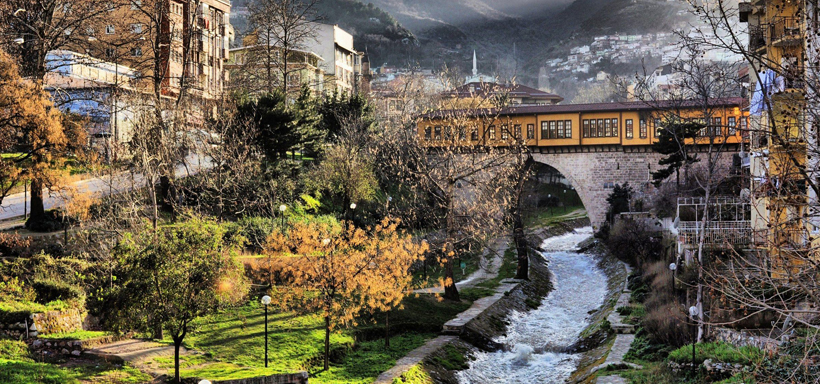
Bursa
The title “Green” of Bursa comes from its
gardens and parks and of course from its being in the middle of an important fruit cultiviting region. In Bursa there are things you should not miss. First of all you are suggested to taste of the delicious “Iskender Kebap”. The candied chestnuts are a specialty and have an unforgettable taste. The peaches of Bursa are unique. Bursa is a center of the silk trade and towel manufacturing in Turkey. It is also the home of the very famous Turkish folklore figures, Karagoz and Hacivat. Because of its being the first Ottoman capital, Bursa is very rich in religious monuments, mosques and tombs, baths.
Something you will enjoy in Bursa are the warm, mineral-rich springs; indeed most of the hotels in this province have thermal bath facilities. The Turkish baths “hamam” are great places which should be visited in Bursa. As for souvenirs you should visit the Covered Bazaar, “Bedesten”, or the Koza Han a selective building and also a center of silk trade. It is certain that Bursa will take some of time for you to see and add some more delightful experiences to your memories.
What to see in Bursa? – The Green Mosque, Cumalıkızık Village, Uludağ
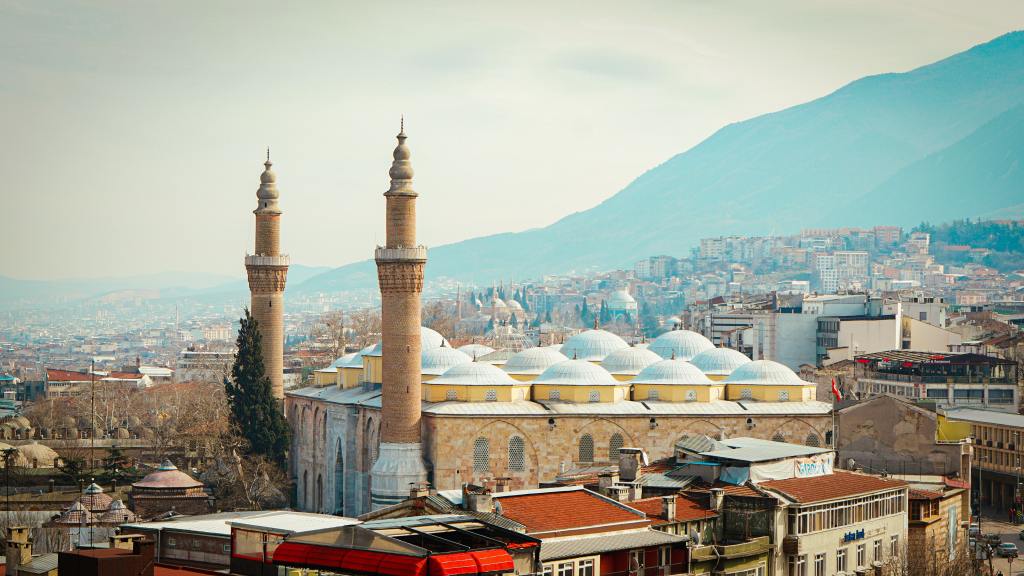
The Green Mosque
The Green Mosque can be shown as the perfect blend between architecture and embellishment, the proof that such works of art were produced in a country where the battles between siblings had come to an end and peace had returned. It was commissioned by Sultan Mehmed I Çelebi and completed in December 1419 or January 1420. The mosque was built between 1419–1421 by architect vezir Hacı İvaz Pasha.
The architectural style known as Bursa Style begins with Yeşil Cami. The mosque is based on a reverse T-plan with a vestibule at the entrance leading to a central hall flanked by eyvans on the east and west and a larger eyvan with mihrab niche on the south. Two small eyvans flank the entryway above which the royal box is located. There are four rooms with fireplaces to the north and south of side eyvans accessed through the vestibule and the central hall respectively. Stairs on both sides of the vestibule lead to the upper floor where the royal lodge and two adjacentt rooms for the royal women are located. Here a passage opens to the balconies on the northern facade where the minaret steps begin.
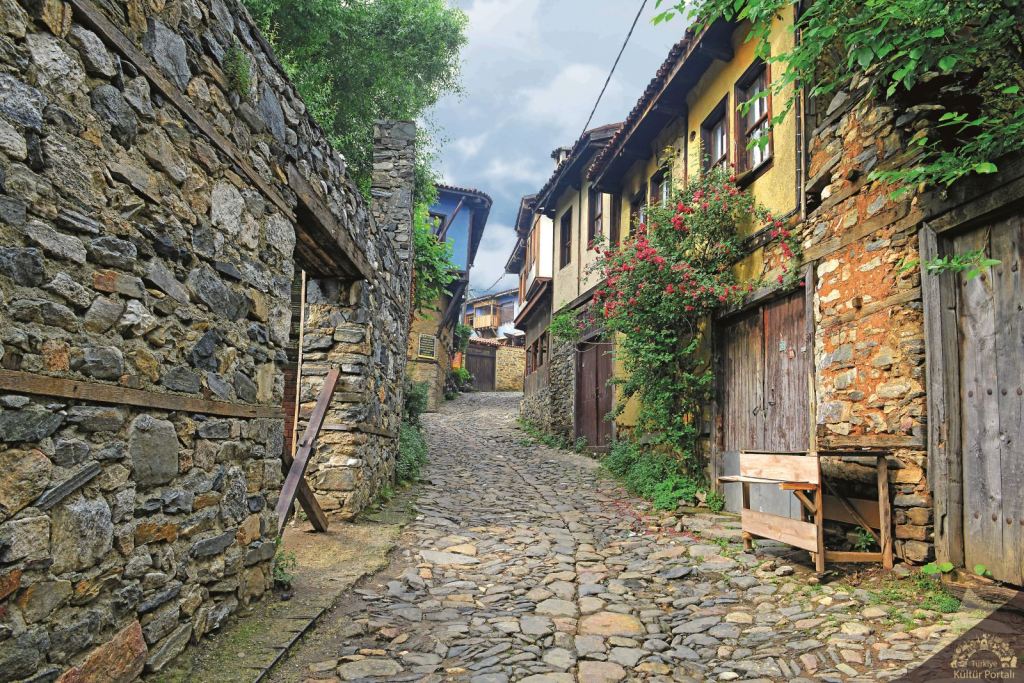
Cumalıkızık Village
Cumalıkızık is a village in the Yıldırım district of Bursa Province, located 10 kilometers east of the city of Bursa, at the foot of Mount Uludağ. Its history goes back to the Ottoman Empire’s foundation period. The village is now included within the border of the Yıldırım district as a neighbourhood. Cumalıkızık was founded as a vakıf village. The historical texture of the village has been well protected and the civilian countryside architectural structures of the early Ottoman period are still intact. Because of this, Cumalıkızık has become a popular but still unspoiled center for tourists. A group of similar villages which are placed close together between the foot of mount Uludağ and the valleys have been called Kızık in Turkish. The famous Cumalıkızık houses are made out of wood, adobe, rubblestones. Most of them are triplex houses. The windows upstairs are generally latticed and with a bay window. The handles and knockers on the main entry doors are made of wrought iron. Cobblestone streets are very narrow with no sidewalks, but a typical medieval gutter in the center for rain and waste water. Cumalıkızık holds 270 historical houses. Some of these houses are in process of restoration and maintenance, and 180 of them are still being used as dwellings.
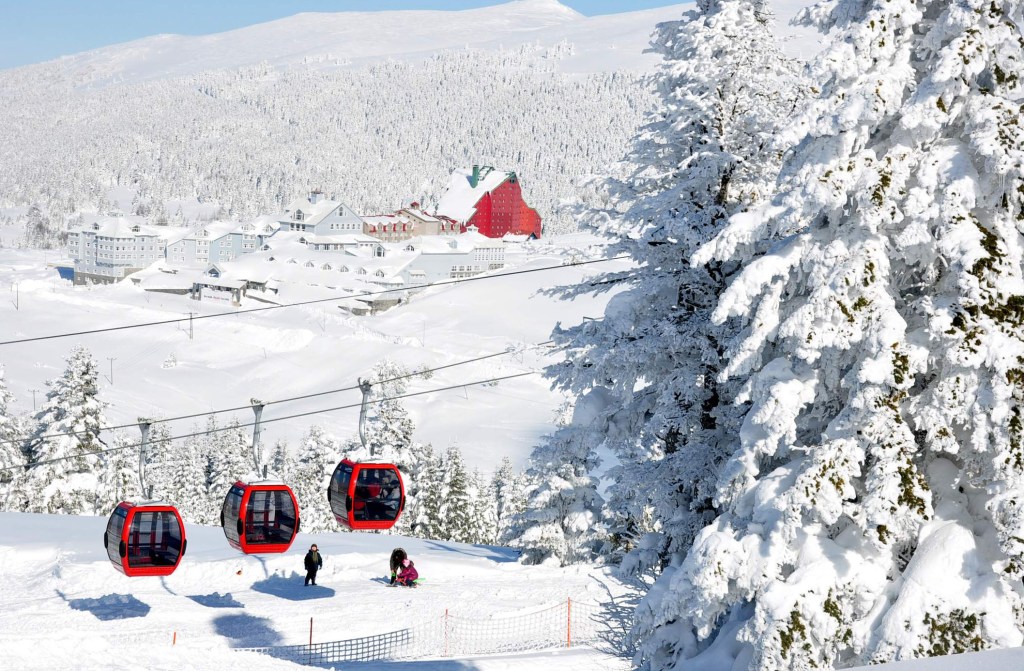
Uludağ Ski Center
Uludag is the largest and most celebrated winter-sports center in Turkey. It is 36 kms from Bursa and easily accessible by car or cable-car. The area is also a national park and is worth a visit at any time of the year. The accommodation is high quality offering the opportunity to enjoy with a variety of entertainment and sports activities.
Uludağ is the fabled Mount Olympus of Mysia. It is defined in mythology as the place where the Gods watched the Trojan war. It is a western part of the Pontic mountain ranges. Its name means ‘Big / high mountain’ – the highest mountain in Western Anatolia, 2543 m.
The skiing at Uludağ is mostly intermediate on lightly forested slopes that are usually open from December until late March. Heli-skiing is also available and there are vast off-piste bowls to explore, albeit a threat to conservation within the national park. There are 27 hotels, 15 of which are privately owned, providing over 3000 beds at present. Further development is underway.
Our route is to Tharce to Edirne, gate of Thrace… If you woud like to go Troy over Thrace first you are suggested to visit Edirne, 243 km. west of İstanbul.
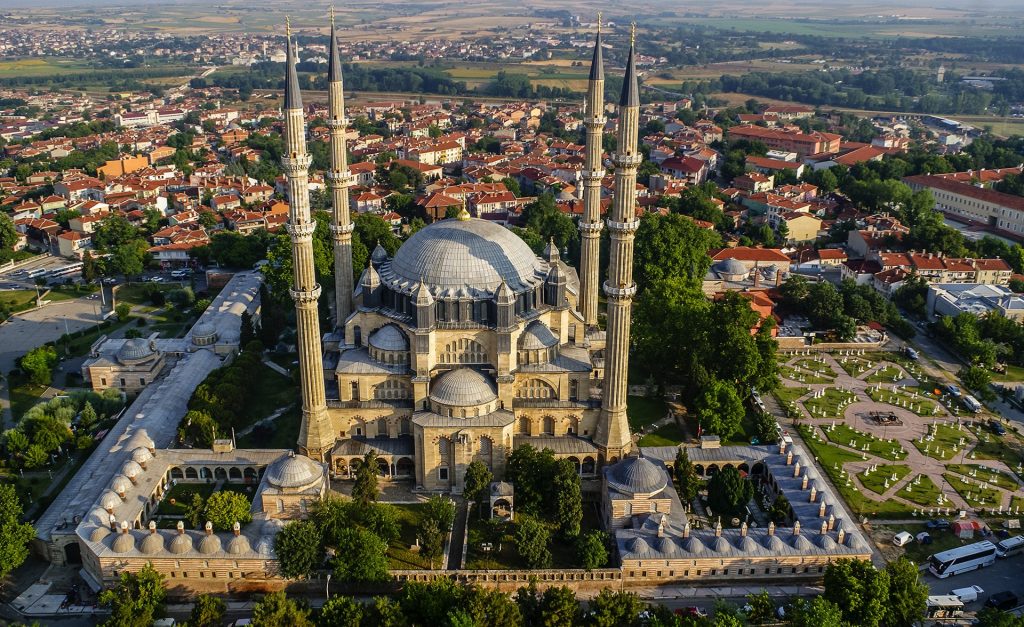
Edirne
Edirne is lying in the curve generale bay the River Tunca just before merging with the River Meriç in the South-East of Balkan Peninsula called Thrace which is 243 km.far from İstanbul taking 2.5 hr. via Europa high-way. Edirne, always is a significant center due to its location in the main route connecting Anatolia to Europe showed its major development in the era of Ottoman predominance. It can be thought that the development of the city was influenced negatively because of gaining a location of border city after the invasions faced since 19th century.
As widely admitted, the oldest settlement, in the area in which Edirne is situated now, was established by Odris/Odrisia-one of the Trak tribes in the part where Meriç and Tunca Rivers merge and it is known that Macedonians transformed it into a colony of Orestias. The name Hadrianopolis was given in honour of Roman Emperor Hadrianopolis (117-138) when he refounded the city in the 2nd century, was used as “Edrenos” and “Edrenaboli” in Islamic resources and “Edrene” form was generated during the reign of Sultan Murat I and probably has been used as “Edirne” since 18th century.
During your vaction it is suggested to visit Selimiye Mosque, Old Quarter, Macedonian Tower and Edirne Taşköprü.
What to see in Edirne? – The Selimiye Mosque
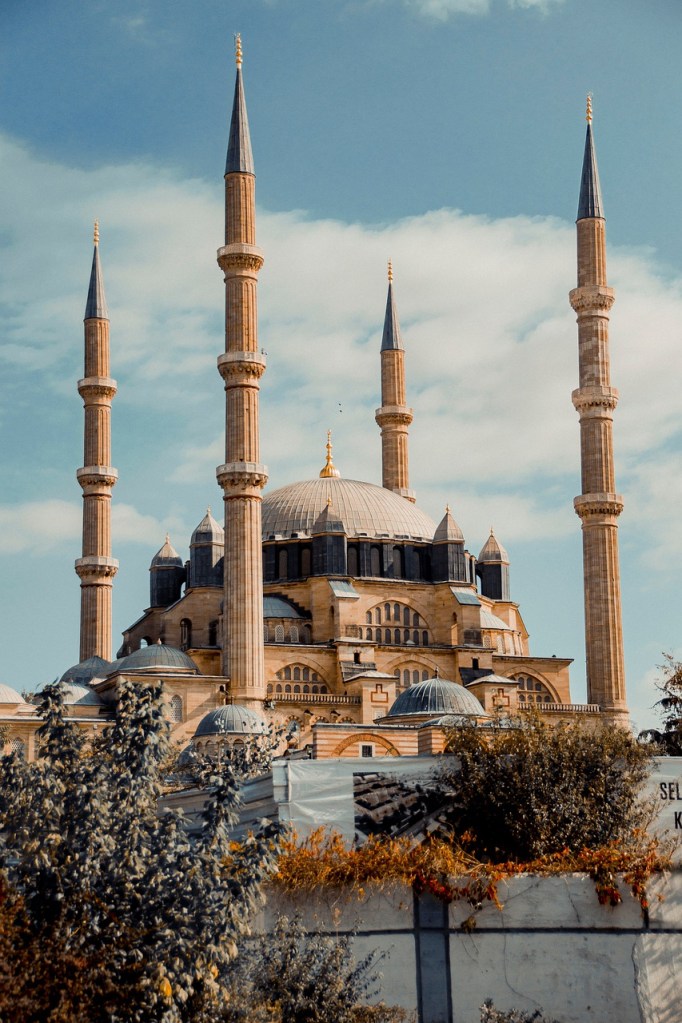
The Selimiye Mosque
Built in the 16th century by the architect Mimar Sinan who is regarded as the most famous Ottoman architect of the 16th century. He was the Chief architect for the sultans Suleiman the Magnificent, Selim II and Murad III and designed 374 structures. Sinan is said to have regarded this Selimiye mosque as his greatest work.
The Selimiye mosque is now on the Unesco World heritage list and pretty much the main focus of many visitors to Edirne. The Selimiye mosque is now on the Unesco World heritage list and pretty much the main focus of many visitors to Edirne.
This mosque consists of a rectangular, nearly square prayer hall and on the north side, a courtyard with porticoes. There are three entrances to the courtyard: north, east and west. In the centre of the courtyard is a 12-sided fountain. Each corner of the prayer hall features a minaret nearly 71 m high with three balconies. The balconies of the minarets on the northeast and northwest corners are accessed by three separate staircases.
 Destination Expert Travel